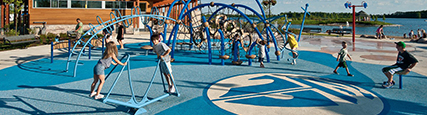
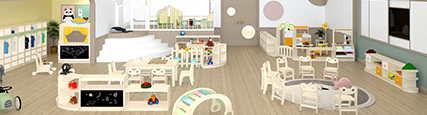
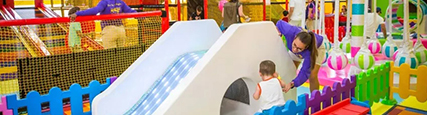
Park play facilities are the core carriers of outdoor activities for children in the community, and their design directly affects children's play experience and the quality of community life. Traditional design, often expert-led, is prone to problems such as facilities that are out of touch with children's needs and lack adaptability. Community participatory design, by incorporating diverse stakeholders into the construction process, ensures that park play facilities truly meet needs, becoming vibrant community spaces that are fun, safe, and provide a sense of belonging.
The core of community participatory design is to transform children from "passive recipients" to "active creators," which is key to creating popular park play facilities. Unlike one-way output design models, designers listen to the ideas of children of different ages through engaging methods such as seminars, drawing competitions, and model building, integrating their needs for climbing, interaction, and exploration into the facility planning. For example, in a Cornell University-participated elementary school playground co-construction project, children's ideas such as sensory gardens and fun interactive facilities were ultimately implemented into play scenarios that met children's needs, making park play facilities more child-friendly and attractive.
Multi-stakeholder collaboration lays a solid foundation for the adaptability of park play facilities. Community-participatory design breaks down the barriers of "designer-led" approaches, linking the efforts of parents, community workers, and planners. Parents, focusing on facility safety and ease of supervision, offer suggestions such as laying rubber mats and adding parent-child interactive facilities, addressing the pain points of traditional facilities' safety hazards and inconvenience in supervision. Community workers, considering the community's population structure, coordinate the needs of children of different age groups to avoid imbalances in facility suitability. Planners are responsible for transforming opinions from all parties into feasible solutions, balancing practicality and spatial aesthetics, ensuring that park play facilities not only meet play needs but also integrate into the overall community landscape.
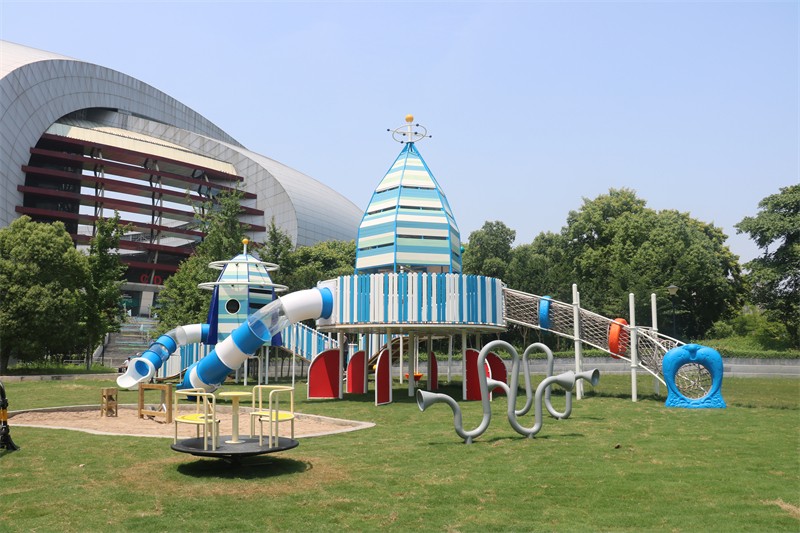
Full-process participation ensures that park play facilities achieve both quality and acceptance. High-quality play spaces are not only about design but also about adaptability and sustainability after implementation. Community-participatory design permeates the entire process from research, design, construction, and acceptance. During the acceptance phase, children and parents are invited to act as "experience officers," testing the safety and fun of the facilities and making timely adjustments to details. In creating child-friendly spaces, the Nancheng Community in Zhongshan City transformed idle land into spaces that combine play and educational functions by fully incorporating residents' opinions throughout the process. This not only revitalized underutilized resources but also garnered widespread acceptance of the park's children's play facilities among community residents, enhancing space utilization and a sense of belonging.
The essence of community participatory design is the "people-centered" co-creation of space. It frees park children's play facilities from the constraints of monotonous designs, catering to both children's play needs and parents' supervision needs while integrating community governance concepts, achieving multiple values of "children's enjoyment, parents' peace of mind, and community approval." In the future, only by continuously practicing community participatory design can park children's play facilities truly become high-quality spaces that connect community warmth, support children's growth, and inject more vitality into community life.
+86-13566236059
#16 Chuangqiang Road, Light industrial area, Lucheng district, Wenzhou city, Zhejiang Province, China.
+86-577-85951908
+86-577-86457291