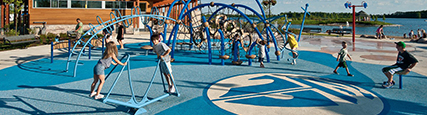
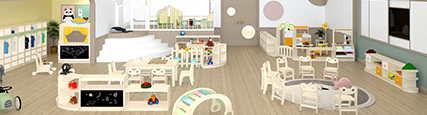
In government-funded parks and community welfare projects, the procurement of large-scale children's playground equipment directly impacts the quality of public spaces and children's safety. When dealing with manufacturers, compliance, safety, practicality, and cost-effectiveness must be considered to mitigate procurement risks. This article outlines key considerations and provides practical guidance for procurement parties to help create high-quality and safe children's playgrounds.
Qualification verification is the primary prerequisite, establishing a solid compliance baseline. Procurement parties must rigorously verify manufacturers' qualification documents to ensure they possess a "Special Equipment Production License" and comply with the requirements of TSG 71—2023 "Safety Technical Regulations for Large-Scale Amusement Facilities." Simultaneously, confirm that the products have passed national standard certifications such as GB8408-2018 "Safety Specifications for Large-Scale Amusement Facilities," and possess ISO9001 quality system certification, product qualification certificates, and authoritative testing reports. Prioritize manufacturers that are drafters of industry standards or have extensive experience in public projects, avoiding cooperation with unqualified and uncertified small workshops, thus controlling project compliance from the source.
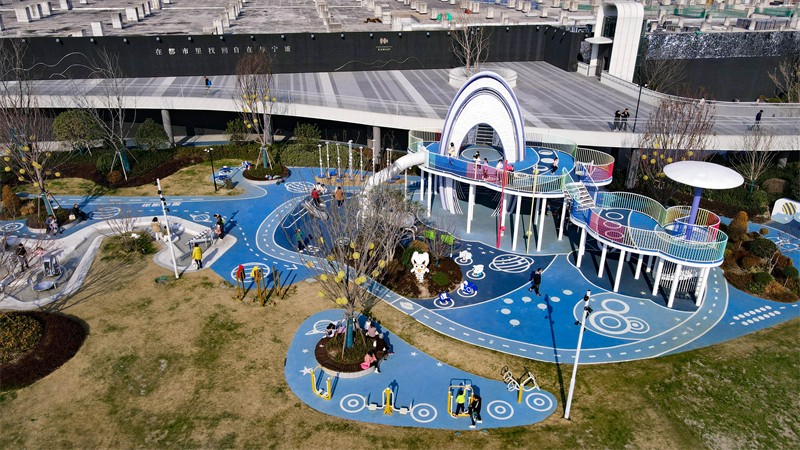
Focusing on product safety and quality, upholding the bottom line of people's livelihood. In terms of material selection, manufacturers are required to use environmentally friendly, non-toxic, UV-resistant, and anti-aging high-quality materials, such as 304 stainless steel and high-density polyethylene. For ground-level materials, EPDM plastic granules with excellent cushioning performance should be prioritized to reduce injuries from falls. The design phase must focus on age-appropriate design, customizing facilities of different heights and difficulties to address the varying motor abilities of children aged 0-3, 3-6, and 6-12, avoiding the risks associated with mixed-age use. Simultaneously, the structural design's stability must be verified, ensuring all components are free of sharp edges and meet child safety requirements.
Emphasis should be placed on customized adaptation and scene integration. Manufacturers must possess professional design capabilities, providing personalized solutions based on the project site size, terrain features, and the overall style of the park/community. For example, in older communities with limited space, compact, combined play facilities can be designed; theme park projects can incorporate local cultural elements to enhance scene recognizability. The purchaser should require manufacturers to provide on-site survey services to ensure reasonable equipment layout and high space utilization, meeting children's play needs while harmonizing with the surrounding environment.
Clear after-sales service terms are essential to reduce operational risks. When finalizing the contract, a clear after-sales guarantee plan must be agreed upon, including a warranty period of 3-5 years or more, a 24-hour after-sales response time, and a 48-hour on-site handling commitment. The manufacturer should be required to provide installation, commissioning, operation training, and regular inspection services to ensure professional and controllable operation and maintenance in the future. The contract should also clearly define the warranty scope, spare parts supply, and fault compensation standards to avoid issues of shirking responsibility later.
Standardize contracts and cost control. Contracts should detail core clauses such as product specifications, quantity, delivery cycle, and acceptance standards, clearly define payment methods and performance bonds, and specifically stipulate acceptance requirements for consistency between materials and solutions. Regarding cost control, avoid blindly pursuing the lowest price; comprehensively consider equipment quality, service life, and maintenance costs to select the most cost-effective solution. Detailed manufacturer quotations should be retained to prevent hidden costs and ensure compliant and transparent use of funds.
In summary, when government parks and community projects connect with manufacturers of large-scale children's amusement equipment, it is essential to prioritize qualification verification, safety and quality, customization and adaptation, and after-sales support. By standardizing processes and controlling details, the procurement projects can achieve safe compliance and long-term operation, thereby effectively improving the quality of public services.
+86-13566236059
#16 Chuangqiang Road, Light industrial area, Lucheng district, Wenzhou city, Zhejiang Province, China.
+86-577-85951908
+86-577-86457291